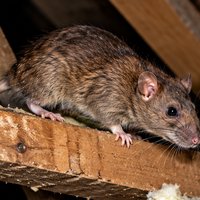
A loft is one of the most common places for a rat problem to go unnoticed for a while, since it's rarely checked day to day.
Scratching or scurrying noises, particularly at night, coming from directly overhead rather than from within a wall, are a strong early indicator.
Gnawed insulation, damaged water tank covers or pipe lagging, and droppings scattered near the loft hatch or along joists are all signs worth acting on.
Chewed electrical cabling in a loft is a genuine fire risk, which is one reason a loft rat problem is worth dealing with promptly rather than leaving it.
Rats are largely nocturnal, so scratching or movement noise overhead is far more likely to be noticeable in the evening or overnight than during the day — a quiet loft in daylight hours doesn't rule out activity.
Beyond insulation, it's worth glancing at any exposed pipe lagging or the outside of a cold water tank — gnaw marks here are a clear sign of activity and, in the case of a damaged tank, can lead to a leak if left unaddressed.
Not necessarily — it depends on which part of the loft is active and how sound travels through your specific structure.
Not always in early stages — smell tends to become more noticeable as droppings and nesting material build up over time.
A quick look from the hatch is fine, but a full check is best left to a technician, especially in unboarded areas.
Tell us what you're seeing and where, and we'll get back to you with a clear price.
 Rats